Higher Education Solutions

User Risk in Higher Education Is the New Attack Surface

Universities and colleges manage research data, student financial records, and open academic networks. Dune helps higher education security teams prevent social engineering and insider threat across every channel.


Threat Landscape

The Biggest User-Driven Threats Facing Higher Education Institutions

Higher education institutions face unique threats that exploit open network access, research data value, and the trust embedded in faculty-student relationships.

Critical
Research Data Theft & Espionage
Nation-state actors and competitors target faculty, researchers, and graduate students to exfiltrate proprietary research, IP, and federally funded project data.
Loss of competitive research advantage, grant funding risk, national security exposure
Critical
Financial Aid & Tuition Fraud
Attackers exploit student enrollment and financial aid systems through account takeovers and fraudulent applications to redirect federal aid and tuition payments.
Direct financial loss, regulatory scrutiny, reputational harm
Critical
Ransomware via Social Engineering
Threat actors use targeted campaigns against staff, faculty, and students to deploy ransomware and disrupt academic operations, research systems, and administrative services.
System downtime, research loss, recovery costs, student and faculty disruption
Product Capabilities

How Dune Helps Higher Education Institutions

Purpose-built capabilities to expose, score, and reduce user risk in higher education environments.
Measure User Risk
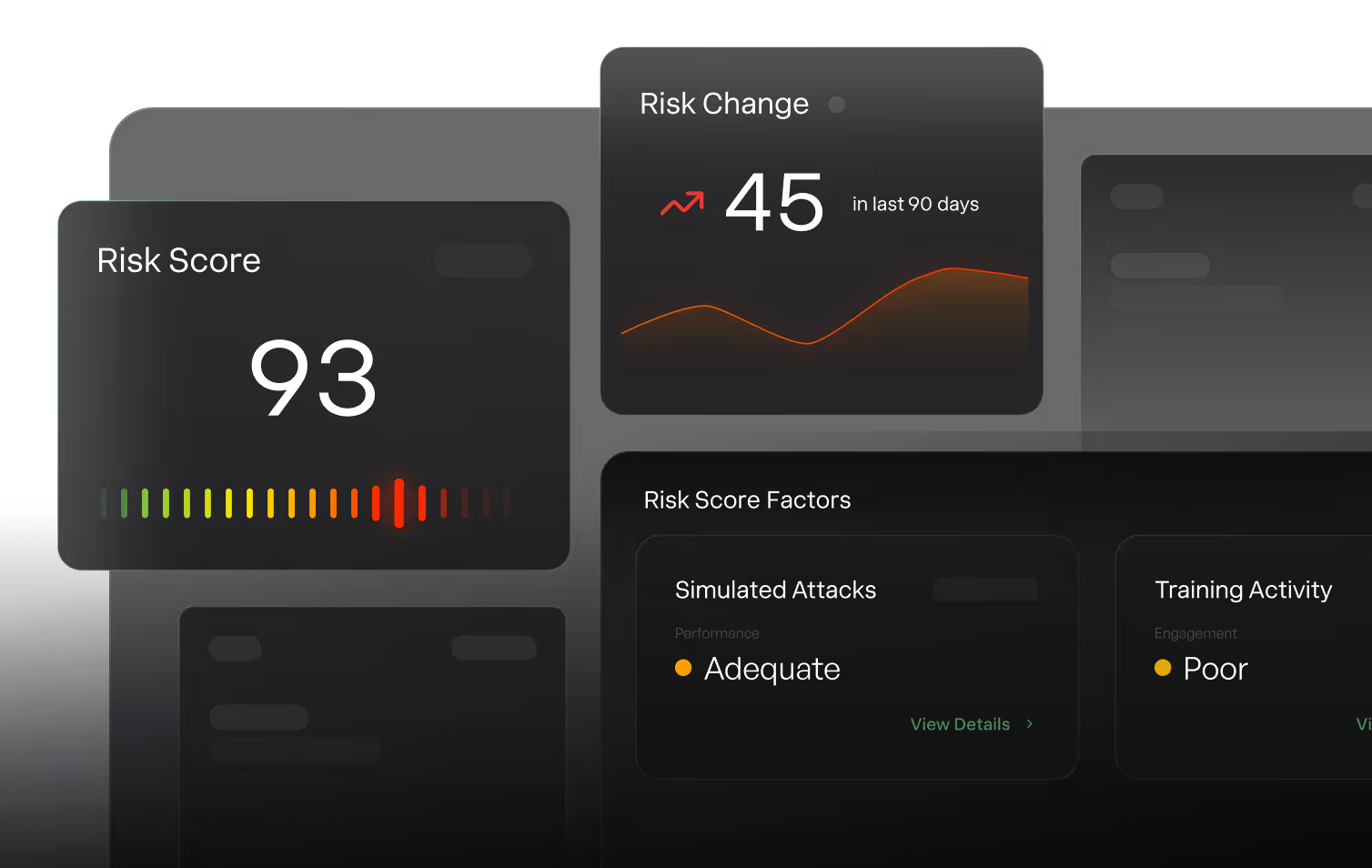
Quantify breach risk with a dynamic User Risk Score, continuously updated from behavioral, contextual, and role-based signals across your security stack.
Custom Risk Score Weighting
Unlimited Input Source Data
Executive Reporting
Simulate Attacks
Launch omni-channel simulations tailored to each user that impersonate trusted roles and adapt in real-time to expose attack susceptibility and insider risk.
GenAI & Conversational Attacks
Trusted Role & Identity Impersonation
Insider Threat Exposure
Reduce Threat Exposure
Adapt training, alerts, and controls in real-time, prioritizing the ~5% driving the risk and minimizing friction for the other ~95%.
Exposure Prioritization
Risk-Based Training & Step-Up Controls
Automated Remediation Workflows
Attack Scenarios

Example Attack Scenarios in Higher Education

See how modern social engineering attacks target higher education institutions and how Dune simulates them.

EMAIL / PORTAL
Financial Aid Redirect via Student Portal Phishing
Attacker sends a spoofed student portal alert prompting the student to re-authenticate due to a fabricated financial aid disbursement issue, capturing credentials and redirecting refund payments
User Decision Point
Students must verify portal alerts through official channels before entering credentials or confirming financial details.
Potential Impact
US financial aid fraud exceeded $6B annually, with ghost student schemes increasingly exploiting digital enrollment systems to divert federal funds.
U.S. Department of Education OIG 2024
Dune Simulation
Dune deploys student portal phishing simulations targeting financial aid workflows with realistic branding and urgency cues.
EMAIL / COLLABORATION TOOLS
Research Collaboration Impersonation
Attacker impersonates a peer institution researcher or grant administrator, targeting faculty with urgent requests to share datasets, access credentials, or sign into collaboration platforms.
User Decision Point
Faculty and researchers must verify collaboration requests through direct contact before sharing data or credentials.
Potential Impact
A 2023 phishing campaign targeting 30+ U.S. universities exfiltrated research and faculty credentials tied to federally funded defense and energy projects. Federal agencies warn the threat is escalating in 2025
FBI Advisory 2023, NCSC Safeguarding Academia 2025
Dune Simulation
Dune launches targeted impersonation attacks mimicking faculty communication styles and research collaboration workflows.
CHAT / SMS / EMAIL
Account Takeover via IT Helpdesk Pretexting
Attacker poses as university IT support, targeting students with urgent messages about account issues, MFA resets, or system access problems.
User Decision Point
Students must verify IT communications before sharing credentials or approving authentication requests.
Potential Impact
The average cyberattack on a higher education institution costs $3.8M per incident, with student account access often the initial foothold into broader administrative and research systems.
Sophos 2025
Dune Simulation
Dune simulates IT helpdesk impersonation across messaging channels, testing credential sharing and MFA approval behavior.
EMAIL / VOICE CALL
Alumni Donation Fraud
An attacker impersonates advancement or development staff to redirect alumni donations or request urgent fund transfers tied to campaigns or events.
User Decision Point
Staff must verify payment requests and donor communications before processing or sharing financial details.
Potential Impact
BEC attacks involving wire transfer fraud average $185,000 per diverted transaction with advancement offices increasingly targeted as high-trust, low-scrutiny payment authorization points.
FBI IC3 2024
Dune Simulation
Dune deploys donor and advancement impersonation scenarios targeting gift processing and fund transfer workflows.
Understanding and prioritizing risk based on role and access is critical. Dune is the only tool that was able to give us the visibility we need.
Jeremy Livingston
CISO at Stevens Institute of Technology
Compliance

Built for Higher Education Environments

Designed to help higher education institutions safely test real-world user risk while meeting regulatory, audit, and compliance expectations.

Enterprise-Grade Capabilities
Designed for universities, colleges, and research institutions

Built with academic security teams in mind, supporting the unique requirements of institutions managing student records, research data, and federal compliance obligations.

Safe-by-design simulations that never access real student or research data

Every attack simulation is sandboxed and controlled. No student records are exposed, no systems are compromised, and no data leaves your environment.

Supports audit, risk, and internal control validation workflows

Generate detailed reports that map directly to audit requirements, demonstrating continuous security testing and user risk assessment.

Demonstrates proactive security posture to accreditors and oversight bodies

Show evidence of ongoing user risk testing and remediation, strengthening your position during accreditation reviews and federal compliance assessments.

Safety Guarantee

All simulations are designed to test human behavior. They do not access real student data, real systems, or disrupt campus operations.

Supports common higher education & enterprise security frameworks

SOC 2 Type II
 Certified – Jan 2024 & Jan 2025
ISO 27001
 Certified – Aug 2024
GDPR
 Compliance Verified – Jan 2025
CCPA
 Compliance Verified – Jan 2025
HIPAA
 Third-Party Attested – Apr 2025
NIST CSF v2.0
 Third-Party Attested – May 2025
Resources

Featured Resources for Higher Education

Explore our latest research, customer case studies, and security insights for securing higher education institutions.

Thank you! Your submission has been received!
Oops! Something went wrong while submitting the form.

No Resources found.

Blog

How Ghost Students Are Exploiting College Enrollment Systems to Steal Federal Aid

Criminal fraud rings are targeting college aid systems with fake student identities. These scams use automation, identity theft, and AI to steal financial aid, lock out real students, and overwhelm public institutions. Here’s how it works and what security leaders in higher ed need to know.

This is some text inside of a div block.
March 23–25, 2026
March 23–25, 2026
April 12, 2026
7 minute read
This is some text inside of a div block.
Webinars

Securing Education

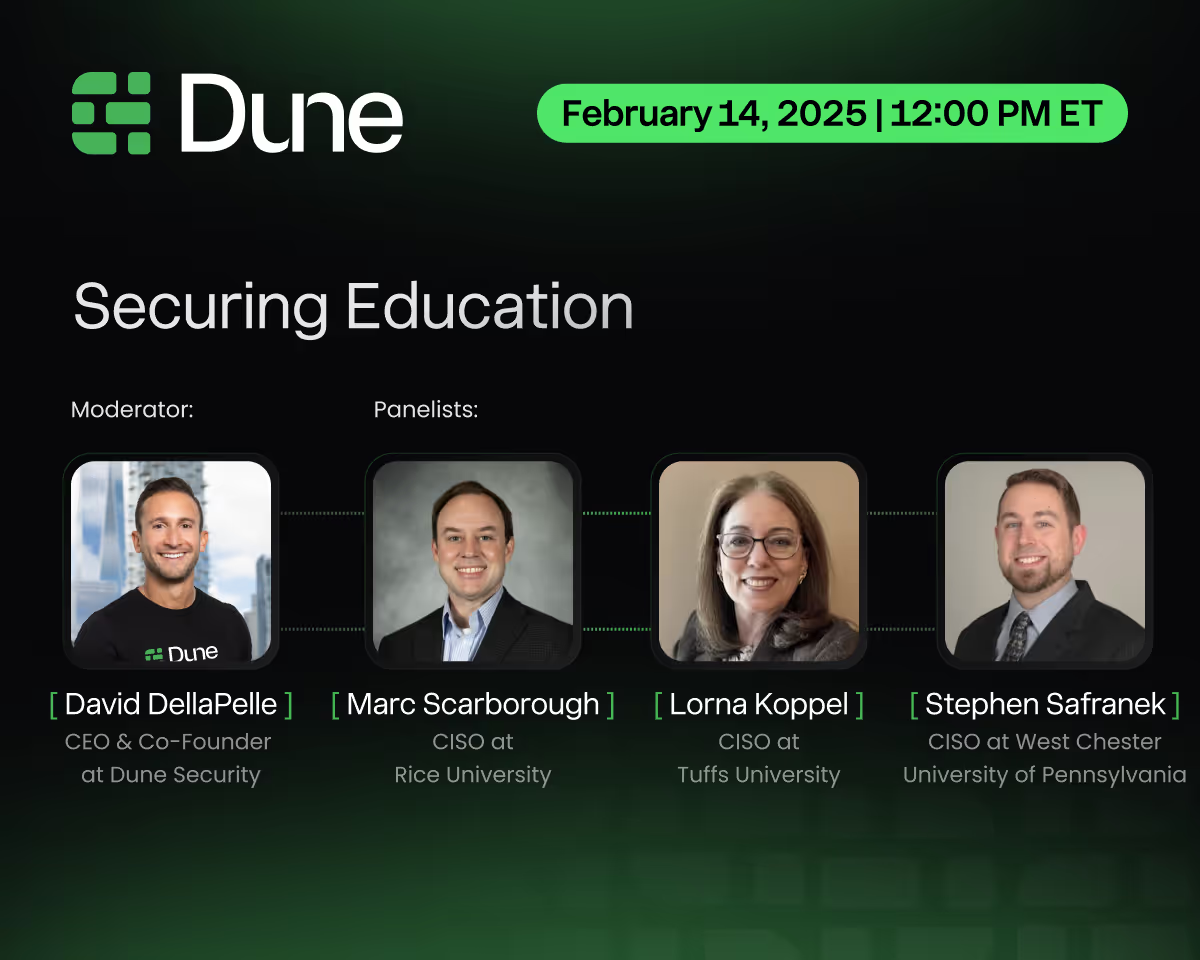
CISOs from Rice, Tufts, and West Chester University discuss the unique cybersecurity challenges in higher ed and how User Adaptive Risk Management secures open networks, safeguards research, and supports diverse user needs.

This is some text inside of a div block.
March 23–25, 2026
March 23–25, 2026
April 20, 2026
40 minute watch
This is some text inside of a div block.
Case Study

Stevens Institute of Technology modernizes security awareness and improves individual risk management with Dune Security

Stevens Institute of Technology modernizes security awareness and improves individual risk management with Dune Security

This is some text inside of a div block.
March 23–25, 2026
March 23–25, 2026
April 29, 2026
This is some text inside of a div block.

Frequently Asked
Questions

Common questions about Dune Security for higher education institutions.
How is Dune different from traditional phishing simulations?
Is Dune safe for use across student and faculty populations?
Can Dune simulate attacks targeting university-specific systems?
Does Dune support voice and messaging attacks?
How quickly can we deploy Dune?

Ready to See Dune in Action?

Schedule a time with one of our experts to see how Dune protects higher education institutions from social engineering and insider threat across every channel.