


David DellaPelle: Welcome, Hussein. Welcome, Patrick. It is really great to have you both here today — two great industry leaders in healthcare, two of the most renowned CISOs in the space. I will pass to Hussein for a quick introduction.
Hussein Syed: Good day. My name is Hussein Syed. I am the CISO for Robert Wood Johnson Health System, based out of New Jersey. We are one of the largest healthcare providers in the state.
Patrick Phalan: Hey everybody, Patrick Felin, Chief Information Security Officer at University of California, San Francisco — one of the leading academic medical centers in the nation.
David DellaPelle: Thank you so much for joining. I had a question I was going to ask before we started recording, but I would love to pose it for the benefit of our audience. Obviously AI was everywhere at RSA Conference two weeks ago — this year it was all agentic AI, last year it was AI for security or security for AI. The technology is shifting. My question for you is: do you think this particular moment is actually a larger inflection point than previous technology revolutions — cloud computing, mobile, the advent of the internet? Do you buy into the hype, or do you think it is just another evolution? Exponential or linear?
Patrick Phalan: I have been going to RSA for 15 years, and every year there is a theme that this is going to change everything. That is what it felt like last year with AI, and you are right — agentic AI was all over the place this year. I do have high hopes for agentic AI. I think this is where we actually start to see some real benefit from AI. I was reading an article recently that flashed back to a couple of years ago, when I believe Gartner told us everyone was going to be a prompt engineer — that everyone would lose their job and all we would have were prompt engineers. And I do not think I have met anyone with the title of prompt engineer. But I do have higher hopes for agentic AI specifically.
David DellaPelle: Tell us more — is the value of agentic AI in removing human error, like an autonomous vehicle that could eliminate 99% of traffic incidents? Is that where you see it?
Patrick Phalan: I see the value in overcoming bureaucracy. There are a lot of tools where AI can do impressive things, but when you get into healthcare — a highly regulated industry — organizations like ours have hundreds of legacy applications, and integrating a new AI product is not easy. A lot of the work goes into implementation. I am hoping that agentic AI will do some of that heavy lifting for us and help organizations see a return on investment more quickly.
Hussein Syed: AI has been around for decades — it is not a new concept. It is maturing and getting where it needs to be. The language models and decision-making capabilities are still in a stage where AI is augmenting human decision-making rather than truly making decisions independently in most areas. Agentic AI will help address some of those interaction challenges. But the bigger challenge I see remains the quality of data and how bias is managed within data sets — ensuring that when people interact with AI, whether through prompts or computer vision, they are not being skewed by bias. Bias can take many forms. Over the next two to three years, I think we will see a significant shift in skill sets. Not necessarily obsolescence of skilled workers, but substantial upskilling in many areas that AI will accelerate.
David DellaPelle: I love that. Let me introduce this webinar properly. The title is Securing Healthcare: Adaptive Security for Patient Data, Medical Devices, and Operational Resilience. We will get into all things AI shortly, but I want to set context for some of our viewers. Healthcare is at a critical inflection point. There are ransomware attacks crippling hospital operations. Medical devices that are unpatched or improperly managed can carry hidden vulnerabilities. Insider threats are a persistent risk in this space. At the same time, healthcare is expanding digitally — electronic health records, telemedicine, which saw enormous growth during COVID, and the Internet of Medical Things are all expanding the attack surface in ways that make adaptive security increasingly important.
The goal of this discussion is to talk about the biggest security challenges in healthcare today, how new forms of cybersecurity can dynamically protect patient data, medical devices, and critical infrastructure, and to offer tactical real-world strategies for CISOs at smaller hospital networks looking to move beyond compliance-driven security.
My first question is for Hussein. Hospitals and medical centers remain high-value targets for cybercriminals anywhere in the world. As the CISO of RWJBarnabas Health, one of the largest hospital networks on the East Coast, what are the biggest security threats that healthcare organizations face today?
Hussein Syed: It is interesting because all health systems and large enterprises are probably at roughly equal threat levels from a broad adversary standpoint. Unfortunately, healthcare is being targeted more heavily than most other industries. If you look at consumer reports or FBI data, there is a significant difference in how frequently healthcare organizations are attacked versus non-healthcare entities. Manufacturing was number two or three in the last FBI report on targeted industries, but healthcare is clearly in the crosshairs.
I think the primary reason is the value of patient data combined with the critical nature of healthcare availability. Adversaries recognize that disrupting healthcare systems can create enormous operational chaos and reputational damage, and the digital transformation healthcare has undergone over the last 10 to 15 years has fundamentally changed how care is delivered. There is far greater reliance on technology, on data for clinical decision-making, and on system availability and immediate access to information.
Clinicians rely immensely on radiology results and lab work to make fast decisions. If any part of that value chain is disrupted, it directly impacts time to care for patients — and that is what makes technology so critical, and so risky, in the healthcare environment.
I had a minor scare personally just two weeks ago — I am totally fine and very healthy — but my liver enzymes in my annual blood work were slightly elevated, and I went through a series of follow-up tests including an ultrasound. It was actually a very seamless process with Weill Cornell Medicine, the hospital network I use in New York City. The radiologist was able to get information to the physicians very quickly, and it turned out to be nothing — maybe dehydration. But in a more serious situation, imagine if something was genuinely wrong and an attacker was holding that system hostage. The impact that could have on the lives and emotional state of patients is profound.
David DellaPelle: And everyone has a mobile app now where they can access their medical information — sometimes natively written applications that clinicians use, and also consumer apps that translate clinical data into plain language. The expectation of immediate access to health information is growing. What is the worst-case scenario for a healthcare CISO? Was it something like the ransomware breach at Lurie Children's Hospital in Chicago?
Hussein Syed: The worst scenario is a prolonged intrusion — an attacker inside your systems for a number of days who has potentially compromised multiple systems. Identifying patient zero, tracing back to the original infected device or entry point, eradicating the threat, and restoring operations to near-normal is enormously difficult. There have been large-scale attacks — and Patrick, feel free to correct me — but I believe the latest data suggests at least 24 to 30 days of system unavailability in the event of a major healthcare attack. Beyond the recovery and business continuity challenges, there are also significant regulatory consequences that follow.
David DellaPelle: And your role is so important to the physical and emotional health of entire communities. I am sure you feel the weight of that every day. Patrick, I will turn to you. You are the CISO of a leading academic medical center, UCSF, which is exclusively focused on health sciences. But you also carry a dual mandate — CISO of both a leading healthcare system and a major research university. These are different domains. How do you balance security, resilience, and access for medical staff and medical students alike?
Patrick Phalan: It is a constant struggle. On the health side, the organization is very top-down and it is a relatively straightforward process to implement security and get people to follow through. You convince leadership and everyone falls in line. Higher education is something else entirely. Faculty are who they are precisely because they are creative thinkers who do not want to be constrained — they do not want to be told to install a security agent or restrict themselves to a limited set of approved software or avoid open-source tools.
So on one end I have a highly regulated healthcare environment, and on the other I have people who — and this is a slight exaggeration, but I do hear it — say they do not want any security at all. They say, "We are doing research because we want to share our findings and our data. We want 100% open collaboration." And those are genuinely hard things to reconcile in a security role.
On the higher education side, we are also a target for nation-state attacks, particularly from China, which has a strong interest in academic research across many industries. The shortcut to getting ahead in R&D is to steal research. I remind our faculty and researchers regularly that their intellectual property can be extremely valuable — and that while open collaboration and participating in the broader research enterprise is important, you do not want others stealing your IP.
I actually just looked this up through Perplexity — I thought the figure was around $60 billion, but it is much higher. The estimates for IP stolen by China vary widely, but the most commonly cited range is between $225 billion and $600 billion per year. When you think about that in the context of healthcare, where government grants are a major revenue source — if institutions are not properly defending their research and development, there is a real risk that funding flows toward organizations that are better positioned to protect it.
This became very real to me personally. One of my brothers was in the FBI, and a case he worked for many years involved Chinese nationals stealing the formula for titanium dioxide — the chemical compound that produces the color white — from DuPont. You should look up the story later. It is a fascinating case, but it involved IP worth billions of dollars being stolen from an American company. It sounded like the plot of a movie, but it was very real.
David DellaPelle: There are a lot of compliance-driven regulations within healthcare — arguably the most heavily regulated industry, alongside financial services. How do you balance that compliance burden against actionable security?
Patrick Phalan: I keyed in when you said compliance versus security. In the early days of my tenure — 10 to 15 years ago — I was very focused on compliance. This was before we really started seeing ransomware bring clinical operations to their knees. I was more concerned with HIPAA compliance, checklists, and checking boxes.
Over the years, as digital transformation accelerated and as this generation of clinicians — who grew up with technology — entered the workforce, the stakes changed. The electronic health record has not even been around that long. Twenty years ago, many clinicians started with paper and were better equipped to function through major system disruptions. That is not the case today. The EHR is integral to operations.
I still think about compliance — it is there for a reason and it has genuinely driven security in the right direction in healthcare. Is healthcare security where it needs to be? No. The fact that it is one of the most targeted industries is evidence of that. But these days I think primarily about security risk and operational continuity rather than compliance.
And I should mention there is a proposed change to the HIPAA Security Rule. It is unclear whether it will pass under this administration, but it is a significant change that would require organizations to invest considerably more.
David DellaPelle: For our listeners — what is the 20-second overview of that proposed change?
Patrick Phalan: The current HIPAA Security Rule is quite vague in places. It has what are called addressable requirements, meaning some controls do not have to be implemented exactly as written — you can address the requirement in alternative ways. The encryption requirement, for example: you could argue that your servers are physically protected behind locked cabinets in secure facilities, and therefore the threat vector for unencrypted hard drives does not apply. The proposed new rules would get much more specific and would double down on risk management. HIPAA already places heavy emphasis on risk management, but the requirements are somewhat vague about what you actually have to do. The proposed rules would, for instance, require organizations to conduct a formal enterprise risk assessment on an annual basis — which would represent a meaningful change.
David DellaPelle: Hussein, our viewers have a sense now of the incredible responsibility both of you carry. As technologies change and the regulatory environment shifts — and given the question of whether AI represents a more exponential change than previous technology cycles — how do you think about building a dynamic, adaptable security organization and security stack without running afoul of those stringent compliance requirements?
Hussein Syed: The best security is invisible security. It does not inconvenience the user — it operates in the background doing what it needs to do. To build that, it is a long game. Security is not a short-term project; it is a program, and it is a journey. You have to start by understanding your environment and your business — how it operates, how care is delivered. No two hospitals operate the same way. You have to understand the workflows, the technology in use, and then plan your security approach around that.
Whichever framework you choose — the NIST Cybersecurity Framework or others — you implement it gradually, sustaining those changes over time. Change management is critical to how security is built and rolled out. You implement only changes that are sustainable, understood, and accepted by leadership and users — and you enforce them thoughtfully. An important element of that is keeping the user community informed. If people understand why certain changes are being made, compliance follows naturally.
For example, HIPAA's encryption and access control requirements: if you implement proper access control and proper encryption, you inherently achieve compliance with those required controls. The challenge is the dynamic nature of the healthcare environment. There are cyclical surges — during flu season, patient volumes spike, ERs are overwhelmed. Our security cannot get in the way of patients being treated. The systems have to be built to sustain that load and remain available. We use technologies like single sign-on and streamlined access controls to make it fast for clinicians to get into systems when they need to.
When APT groups — advanced persistent threat groups — change their tactics and increase their sophistication, users across the organization: doctors, clinicians, researchers, medical students, administrators — all need to understand how the threat landscape is shifting. Because there is no silver bullet on the technology side. Eighty to ninety percent of breaches still originate within the human layer, depending on which data you look at. How do you keep users security-aware without getting in the way of them treating patients?
It is genuinely difficult because a clinician's primary responsibility is patient care. Our job is to help them deliver care safely and securely. Patient safety comes first in every health system — everything else is secondary. So our job is to help clinicians understand that cybersecurity is patient safety. Failing to properly secure systems can directly result in patient safety issues. When systems go down, when medical devices become unavailable because of a cyber incident — that is a patient safety problem. Continuous awareness is key, but it has to be succinct and delivered in a way that the workforce can actually absorb. A threat that was not even considered a risk a month ago might be critical today because threat actors have found a way to circumvent existing controls.
There are effectively two lanes running simultaneously: adversaries are constantly looking to exploit any vulnerability they can find, and our job is to protect against them while acknowledging that risk will never be zero.
Patrick Phalan: I was about to jump out of my seat to add to that. Five years ago, everyone was excited about MFA. We thought we had solved the stolen credentials problem. And here we are, and one of the biggest challenges I deal with — and this week is no exception — is Duo fatigue and MFA harassment. Users getting hit with a constant barrage of MFA prompts and eventually just accepting them. It happens over and over. People are busy. There is so much to remember. These are smart people, they are doctors — and this control that we thought was a panacea has been largely figured out by threat actors. The threats have evolved, and we need to keep adapting our approach. We need our user base to understand this continuing threat, and annual monolithic cybersecurity training does not help with that.
David DellaPelle: We have a saying at Dune Security: security awareness training is dead. Which has a lot of meanings, but what we typically mean is exactly what you described — that standardized, one-size-fits-all training just does not work. It is ineffective and inefficient. And what really struck me is what you just said about MFA fatigue. I have never heard that phrase before but it makes complete sense — people feel harassed by it.
Some CISOs and security leaders are categorically skeptical of user security awareness — they say it will never work, and we just need to build better castle walls. In my conversations with probably thousands of CISOs, roughly 3 to 5% hold that view. The other 95 to 97% are thinking very differently.
Patrick, given the enormous scale of the UC system and the complexity of your organization, how are you thinking about adapting the user security posture? In a perfect world, how would you like to prevent phishing, social engineering, and insider threats?
Patrick Phalan: I wish I had a complete answer. I do know that sitting in front of slides for an hour is not the answer. And here is another real-world example I saw recently: a technique called ClickFix. A threat actor compromises a legitimate website and adds a legitimate-looking CAPTCHA. The user sees a real-looking verification — select the fire hydrants, buses, bicycles, whatever — and at the end of the CAPTCHA flow, malicious code is copied to the user's clipboard. The user is then told to open a command prompt or PowerShell window and paste a script. The users have no idea what they are doing — they think they are just completing a verification — and they are actually installing a remote access trojan on their computer.
That is not something you can train people on in an annual training cycle. I was not familiar with it until we saw it used against us — it apparently became prevalent toward the end of 2024. Every year there are going to be new techniques like that. The challenge is: how do you deliver the right training to the right people at the right time, in a format small enough that they can consume and remember it? I think Dune's approach is genuinely the way of the future.
David DellaPelle: Thank you. One thing we think about is not just improving training effectiveness through hyper-targeted content and AI-driven phishing simulations tailored to a user's role and risk profile — we also mimic workflows. We can completely replicate a user's day-to-day interactions and, scalably across hundreds of thousands of users, deliver the highest-quality social engineering simulations possible.
But what really strikes me about this conversation is the emotional element. We reward low-risk users. We define risk based on the business impact of the role, simulated attack data, training completion data, and risk signals from the rest of the security stack — currently four signal sources, potentially more as the product evolves. Users who are low-risk across that comprehensive data set get rewarded by having their training requirements reduced. Simple concept, but powerful. And a key outcome is reducing the adversarial relationship that often forms between security teams and end users, which can itself be counterproductive to improving security awareness.
Hussein, my question for you: with AI accelerating both the quantity and quality of social engineering attacks — Patrick just described a very sophisticated technical example — what about the broader range of modalities? Phishing, deepfakes, AI-driven targeting based on user data? The Coinbase breach yesterday was a fairly significant example of sophisticated social engineering. What is keeping you up at night in terms of the quality of attacks you are seeing?
Hussein Syed: AI has definitely amplified both the quality and the volume of attacks. Deepfakes, phishing, and other techniques are becoming very close to indistinguishable from real communications. It is increasingly difficult for someone to determine whether an email, phone call, or text message is genuine or a fabrication. The volume is increasing and so is the quality, and where those two trends intersect is where the real challenge lies. At some point, users — who are the weakest link — will fall for it. That is the adversary's endgame: getting someone to click on something, accept an inbound remote access request, or take some other action.
We need to separate education from awareness. Organizations have long focused on education — the once-a-year training we have all discussed — but awareness is what we actually need. Awareness means taking real-life incidents and data and building something meaningful around them, so users can actually recognize and detect the types of attacks being directed at them in real time. The challenge is finding the right dosage of awareness to deliver to each user.
Risk-stratifying the user community lets you focus on high-risk users proportionally. People in high-profile or highly sensitive roles may need significantly more awareness than others. It is a complex problem, and AI is going to change the game for adversaries just as it is changing the game for legitimate business.
Patrick Phalan: What Hussein said made me think about the makeup of my organization. A university is like a city. We have a police department, cafeterias, stores, doctors, nurses — virtually every job role you can imagine. And the threat model for different types of employees is completely different. We see gift card scams constantly targeting the C-suite: messages that appear to be from the CEO saying something like, "I need $1,000 in Google Play gift cards immediately." That happens over and over, directed at executive assistants and senior leaders. Cafeteria workers are not being hit with that scam. That is a clear example of where training needs to be targeted and aligned to the actual threat model for each user group.
David DellaPelle: We think about this in terms of three interconnected products: user adaptive testing, user adaptive training, and user adaptive security. Patrick, you are in a unique position to answer this — you manage both a healthcare organization and a higher education institution, each with incredibly different user populations. Have you ever thought about dynamically adjusting access and permissions based on actual user risk? Not just role — but behavior, how they interact with simulations, what signals are coming from across the stack?
Patrick Phalan: That will always be the dream, and it makes so much sense. It is genuinely frustrating when you have an incident and you find patient zero and discover they had more access than they actually needed. Another common problem in large organizations is rights creep — someone who has been with the organization for 20 years has had five different jobs, and they probably still have permissions from roles they held years ago that have nothing to do with their current responsibilities. Having the ability to do what you are describing — dynamically right-sizing access based on actual observed risk — would be a game changer.
David DellaPelle: That is exactly why we think we have a real opportunity here. I have talked to some of the top VCs and they will say, "You could build a company with $20 million ARR by replacing KnowBe4 security awareness training — and that is great. But how do you get to hundreds of millions?" User adaptive security is the vision. That is the path there.
We are almost at time. Is there anything either of you wants to add before I wrap up?
Hussein Syed: Security is a building block. It is not a short game. The human is at the center of it, and you have to approach this with that in mind — educating and equipping people continuously.
David DellaPelle: What really struck me in this conversation is that there were amazing companies built in adjacent layers — CrowdStrike, Okta, Wiz in the cloud security space. But there has never been a truly great, enduring company focused specifically on the human layer with technology that actually works for complex institutions. The human layer is where the opportunity is.
Let me wrap up. This was an amazing conversation. Hussein, Patrick — thank you for your time. For the healthcare CISOs watching this: we covered how static security models are potentially failing healthcare as the attack surface expands and attacks grow more sophisticated in both quantity and quality. We talked about how legacy approaches to security awareness, access controls, compliance, and friction may no longer be sufficient. We talked about what it means to build a dynamic security posture through role-based protections, behavior-driven access management, and increasing automation through AI without increasing risk. And we talked about why user adaptive testing, user adaptive training, and user adaptive security represent the future for healthcare. Thank you both so much.
Patrick Phalan: Great to talk to you, David.
Hussein Syed: Thank you. Same here.
Healthcare is at a critical inflection point. Ransomware routinely cripples hospital operations for weeks, medical devices carry hidden vulnerabilities, and EHR-dependent clinicians no longer have a paper-based fallback – while insider threats persist and the expansion of telemedicine, patient apps, and the Internet of Medical Things keeps growing the attack surface faster than most programs can address it.
In this session, Hussein Syed (CISO, RWJBarnabas Health) and Patrick Felin (CISO, UCSF) unpack why healthcare organizations are among the most targeted in the world, how to defend patient data, medical devices, and clinical workflows without disrupting care delivery, what securing legacy infrastructure and enabling safe telehealth actually requires, and how AI is changing both attacker tradecraft and the defender's playbook.
Key Takeaways
- Cybersecurity is patient safety. When EHRs, imaging, or labs go down, time to care collapses. Major healthcare incidents now average 24 to 30 days of system unavailability, with cascading regulatory and clinical consequences.
- Compliance is necessary, but no longer sufficient. HIPAA has driven security in the right direction, and proposed Security Rule changes will raise the bar further. Mature programs now lead with operational continuity and risk, treating compliance as a byproduct of strong controls rather than the goal itself.
- MFA alone is no longer a panacea. Push fatigue, MFA harassment, and prompt-bombing are routine. Pair phishing-resistant MFA with behavioral signal and dynamic access so that real-time risk, not just role, drives what each user can do.
- Annual training does not keep up with techniques like ClickFix. Adversary tradecraft evolves monthly. Replace once-a-year monolithic training with short, targeted awareness delivered to the right user at the right time, calibrated to that user's actual risk profile.
- Integrated security is the future of healthcare and academic medicine. Dynamic testing, risk scoring, and access controls together let CISOs reduce friction for low-risk users, focus pressure on high-risk users, and stop rights creep before it becomes the entry point for the next ransomware incident.
Stay Updated
Get the latest threat intelligence, research, and product updates from Dune Security.


Photo Gallery
Step into the atmosphere of our past event — watch the recap and relive the moments where cybersecurity, innovation, and community came together.
Our Latest Insights


Stevens Institute of Technology modernizes security awareness and improves individual risk management with Dune Security
Stevens Institute of Technology modernizes security awareness and improves individual risk management with Dune Security



Hitachi Digital future-proofs security training for a global workforce with Dune Security
Hitachi Digital future-proofs security training for a global workforce with Dune Security


Phishing Didn't Leave the Inbox. It Expanded Around It.
Mobile-centric phishing carries a 40% higher success rate than email. Vishing is up 442%. Deepfake fraud is projected to hit $40 billion by 2027. The attack surface didn't shift, it expanded. Here's what that means for enterprise defense.
.jpeg)
Social Engineering Is About to Be the Only Game in Town
AI is finding and patching zero‑days at machine speed. The traditional attack surface is collapsing. The only place attackers can still win consistently is the user. Learn what that means for CISOs trying to defend the enterprise, and why the operating model that worked for networks, endpoints, and identity has to come to the User Layer next.

The Top User-Driven Cyber Threats Targeting Law Firms
Law firms sit on some of the most sensitive and valuable data in the enterprise, and attackers have built an entire playbook around exploiting the users who handle it. Learn how four dominant threat vectors are targeting legal sector workflows in 2026 and what it takes to stop attacks at the User Layer.
Securing Healthcare
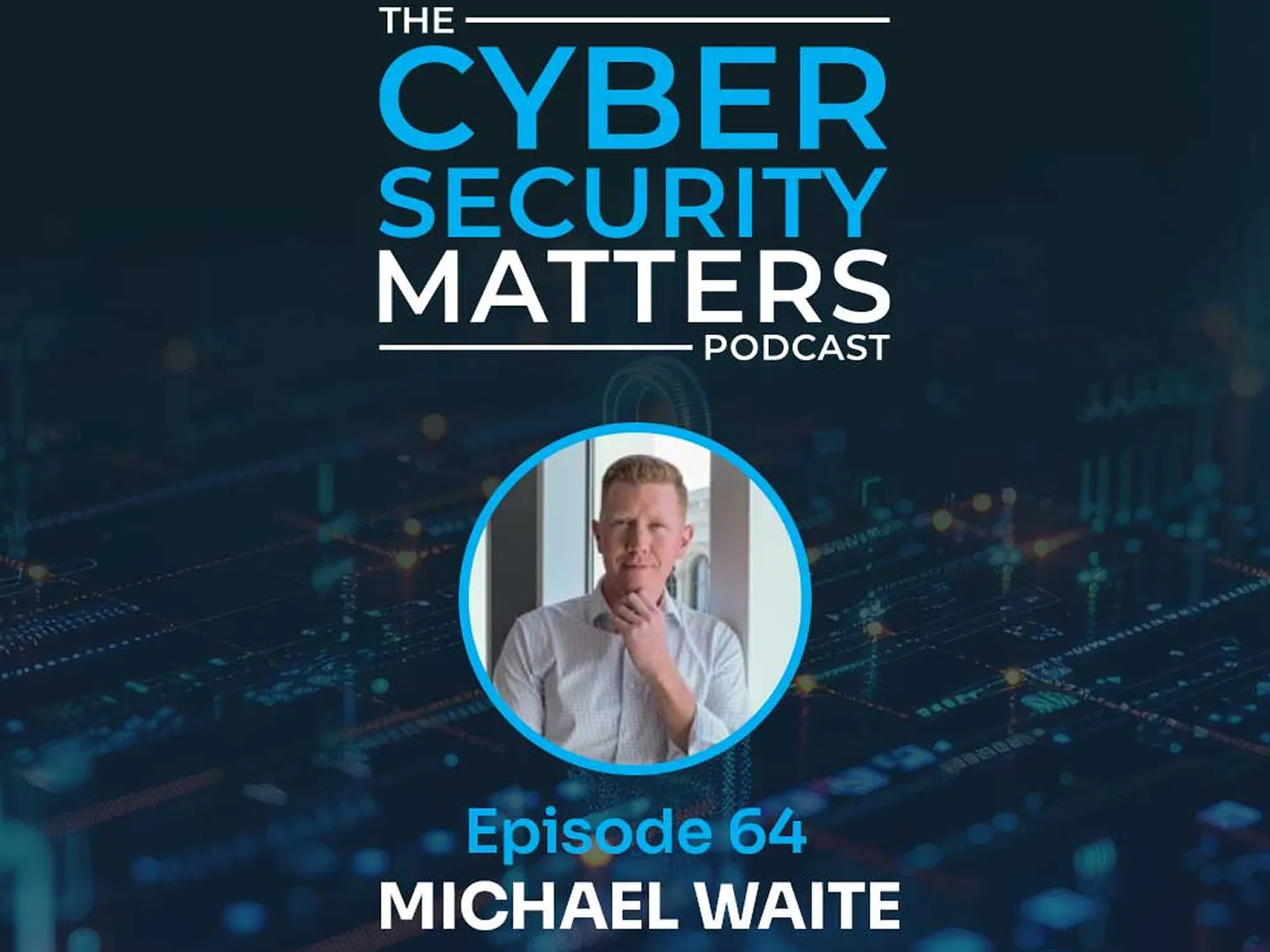
Dune Security CTO Michael Waite joins the Cyber Security Matters podcast to discuss how AI-driven social engineering is evolving, why legacy security awareness training no longer works, and how behavior-based risk quantification can better protect users from emerging threats.
Securing Healthcare
Dune Security CEO David DellaPelle joins Secure Insights to break down why user risk drives breaches, how AI is accelerating social engineering, and why legacy awareness models are no longer effective.
Securing Healthcare
Dune Security CEO David DellaPelle joins the Cyber Security America podcast to explain how AI-driven social engineering is outpacing traditional security awareness training and why organizations need a behavior-driven approach to identifying and reducing user risk.
Philadelphia Area Cyber Technology Showcase & Golf Outing
Dune Security sponsored GuidePoint Security's Philadelphia Area Cyber Technology Showcase and Golf Outing, a regional gathering of cybersecurity professionals and technology partners.
.avif)
Controlled Chaos: Enabling Innovation While Ensuring Safety & Security
GRC and security leaders from UiPath, Yugabyte, and CXD Consulting on enabling rapid innovation without losing the controls that keep the business standing.
.avif)